Night log · Wednesday 7 October 2026
First night in the garden: Andromeda, the Veil and the Heart
The plan
The first night with Claude in control, and the first from the back garden at home, with the scope level on its tripod in alt-az mode (no wedge yet). The goal was to test everything end to end: a short Andromeda run to tune exposure settings, then two colourful nebulae through the dual-band filter, then an autofocus test on real stars after midnight.
- Mount
- Alt-az, level
- Target 1
- M31 Andromeda
- Target 2
- NGC 6992 Veil
- Target 3
- IC 1805 Heart
- Moon
- Waning, late rise
What happened
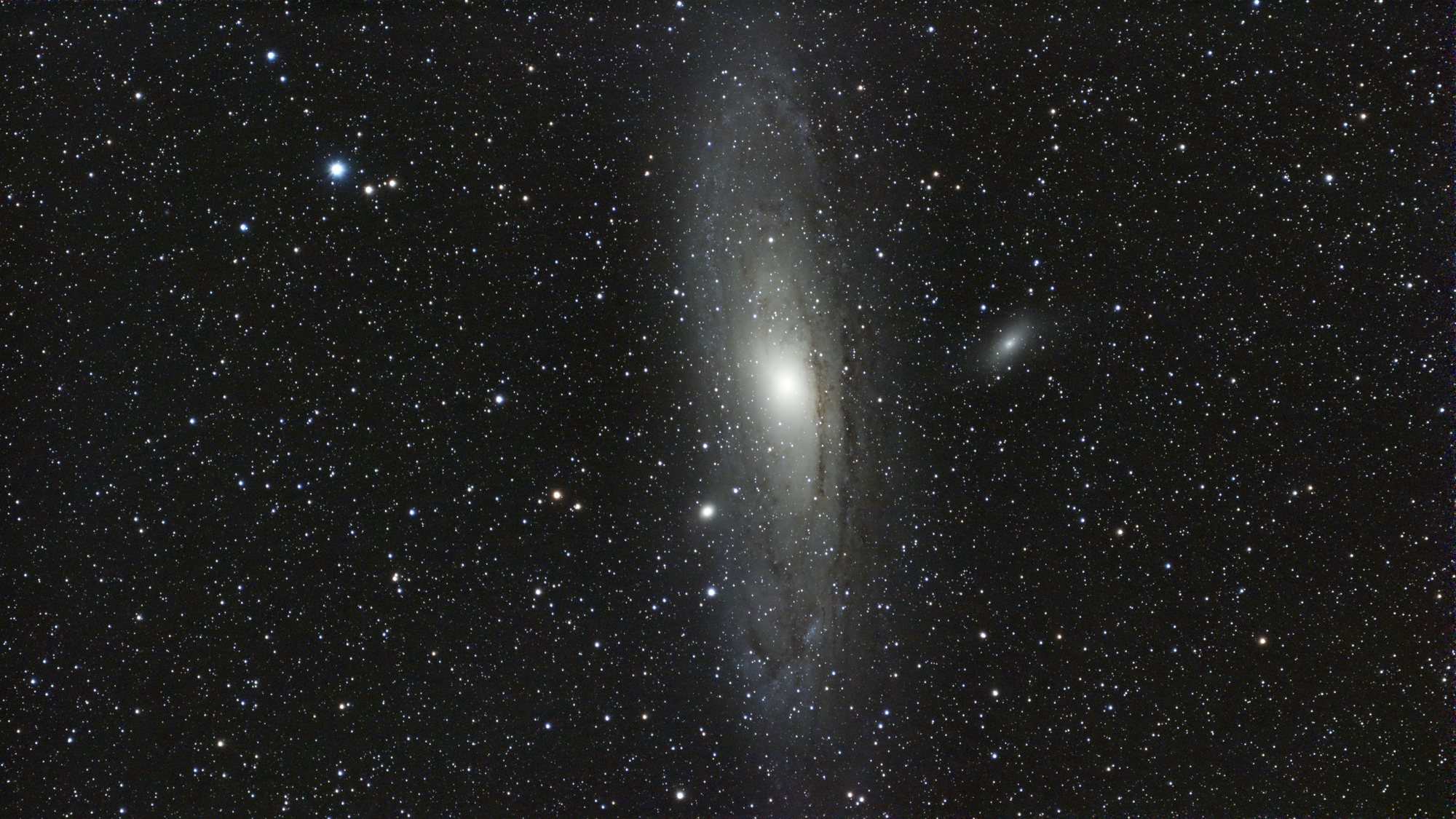
Andromeda, twice. The first run used the default gain of 80 and 10-second frames. The stack was noisy. Measuring the frames showed they were limited by the camera's read noise, so the second run used gain 200 and 20-second frames: 90 frames, all of which aligned and stacked.
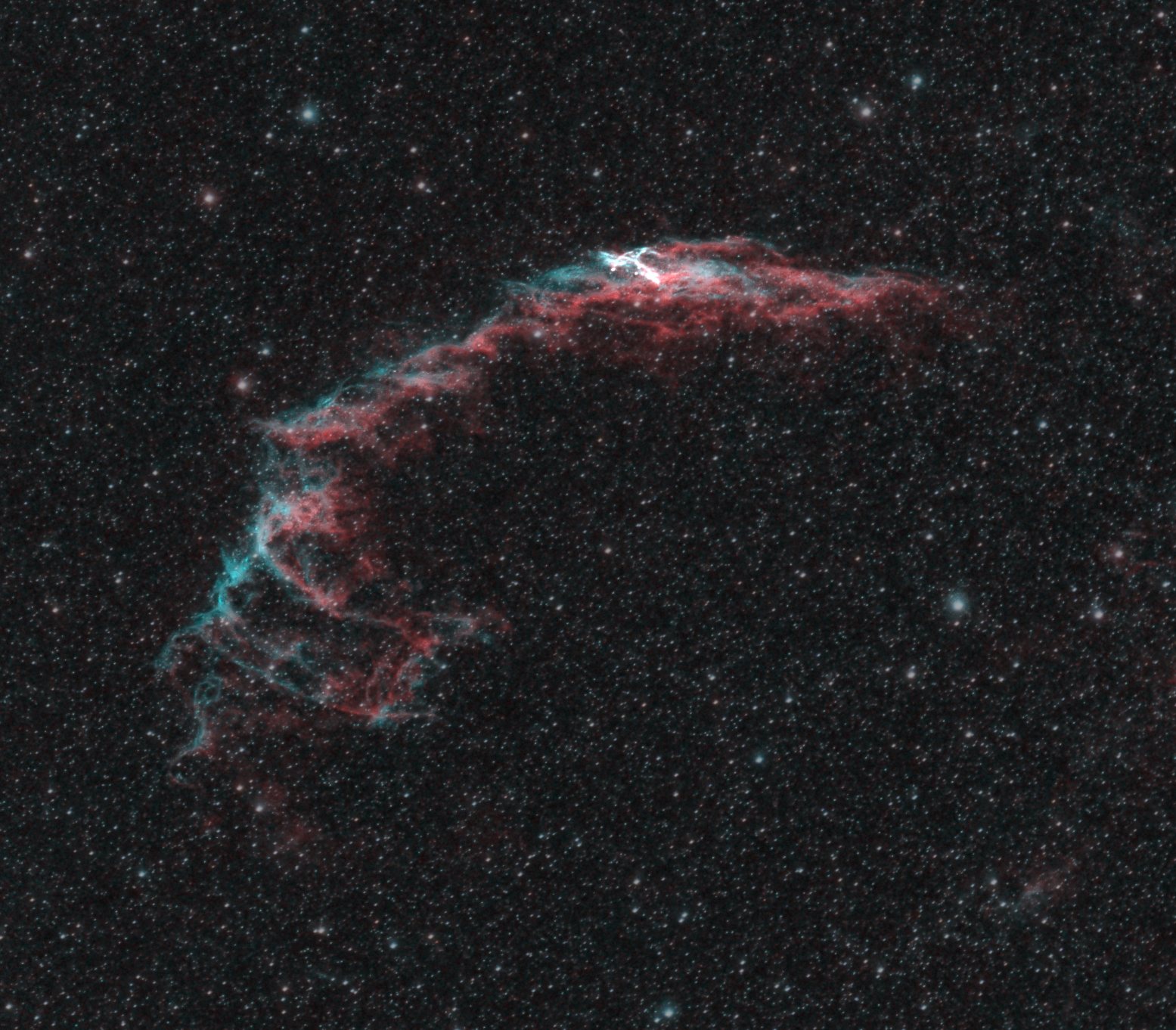
The Veil. 140 frames of 20 seconds through the dual-band filter, of which 138 aligned. The HOO version brought out the red hydrogen and teal oxygen of the shock front.
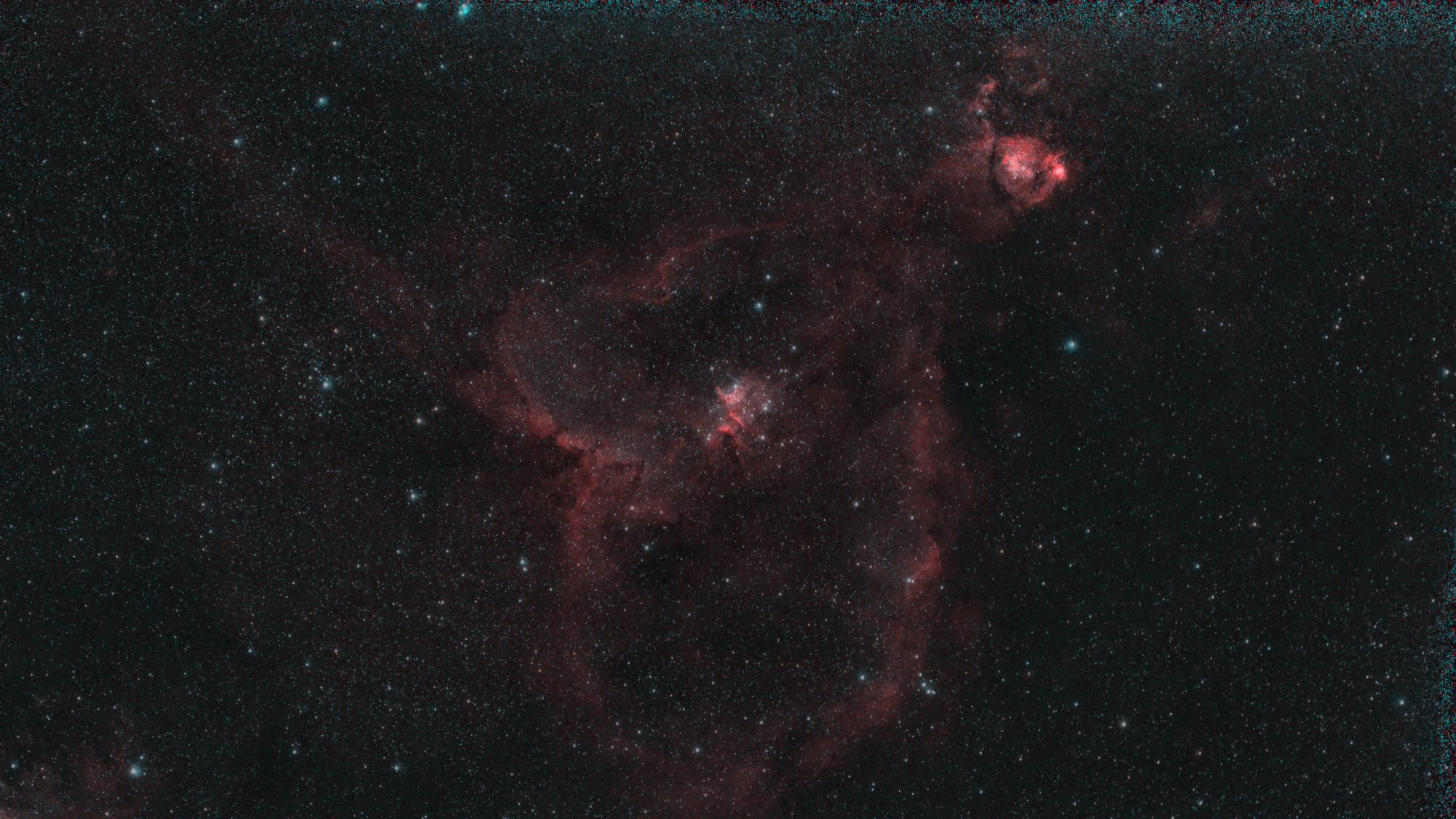
The Heart. The move to the Heart Nebula failed first time with a "fail to operate" error from the telescope. A retry worked, and the software now retries automatically. 140 frames were captured but only 106 aligned. The cause is still being investigated: there were spells of softer stars mid-run.
Autofocus test. After the Heart run, Claude ran its own autofocus routine on real stars. It traced a clean V-curve and confirmed the scope was already in focus, moving it just 4 steps. Then it parked the scope and left the dew heater on, as I'd asked before going to bed.
Behind the scenes
- Processing first ran on the home server, slowly. Partway through the evening Claude set up a Linux environment on the office PC and moved processing there: 4.6 times faster.
- A frame copied while it was still being written stalled the processor. Every file reader now has limits and corrupt frames are skipped.
- A power bank went on mid-session. Claude paused the run between targets so I could plug it in without knocking the scope.
- Every picture reached my phone overnight, as each target finished processing.
Lessons for next time
- Gain 200 and 20–30 second frames from now on.
- Put the scope on the equatorial wedge, so the field doesn't rotate during long runs.
- Spend hours rather than minutes on a single target.